Showing posts with label mitochondria. Show all posts

Thursday, 2 April 2015

Stem Cells Age-discriminate Organelles to Maintain Stemness

Stem Cells Age-discriminate Organelles to Maintain Stemness
Thursday, 02 April 2015

Tissue stem cells, that continuously renew our tissues, can divide asymmetrically to produce two types of daughter cells. One will be the new stem cell, whereas the other will give rise to the differentiating cells of the tissue.

A study jointly leads by laboratories in the Institute of Biotechnology, University of Helsinki and Massachusetts Institute of Technology (MIT) investigated whether stem cells may also use asymmetric cell division to reduce accumulation of cellular damage. Damage build-up can cause stem cell exhaustion that result in reduced tissue renewal and aging.

Human mammary stem-like cell apportions
aged mitochondria asymmetrically between
daughter cells. Mitochondria were labelled age-
selectively red 51 hours prior to imaging, leaving
mitochondria that are younger unlabelled. The
daughter cell that will become the new stem cell
(bottom left) receives only few old mitochondria.
Credit: Julia Döhla. 
Researchers developed a novel approach to follow cellular components, such as organelles, age-selectively during cell division. Scientists in David Sabatini's lab studied stem-like cells (SLCs) from cultures of immortalized human mammary epithelial cells. These SLCs were chosen because they express genes associated with the stem-cell state (referred to as stemness), are able to form structures known as mammospheres in culture. To track the destinations of subcellular components during cell division, the researchers, led by former postdoctoral scientist Pekka Katajisto, tagged the components – including lysosomes, mitochondria, Golgi apparatus, ribosomes, and chromatin – with a fluorescent protein that glows when hit by a pulse of ultraviolet light.

"We found that stem cells segregate their old mitochondria to the daughter cell that will differentiate, whereas the new stem cell will receive only young mitochondria" says Pekka Katajisto, a Group leader and Academy research fellow at BI.

By tracing the movements of the glowing organelles, the researchers were able to demonstrate that while the normal epithelial cells distributed all of the tagged components symmetrically to daughter cells, the SLCs localized their older mitochondria distinctly and passed on the lion's share of them to the daughter cells headed for differentiation. The researchers ultimately found that the number of older mitochondria in those cells was roughly six times that in daughter cells whose fate was to remain as stem cells.

Mitochondria appear to be particularly important for stem cells, as other analysed organelles were not similarly age-discriminated, and since inhibition of normal mitochondrial quality control pathways stopped their age-selective segregation.

"There is a fitness advantage to renewing your mitochondria," says David Sabatini, Professor at MIT and Whitehead Institute.

"Stem cells know this and have figured out a way to discard their older components."

“While the mechanism used by stem cells to recognize the age of their mitochondria remains unknown, forced symmetric apportioning of aged mitochondria resulted in loss of stemness in all of the daughter cells," says Katajisto.

"This suggests that the age-selective apportioning of old and potentially damaged organelles may be a way to fight stem cell exhaustion and aging," says Katajisto who now runs a lab at the Institute of Biotechnology at University of Helsinki.

Katajisto laboratory is now exploring how old mitochondria differ from old, and whether this phenomenon occurs in other cell types beyond the human mammary stem-like cells examined here as well as in in vivo.

Contact: Pekka Katajisto

Reference:
Asymmetric apportioning of aged mitochondria between daughter cells is required for stemness 
Pekka Katajisto, Julia Döhla, Christine Chaffer, Nalle Pentinmikko, Nemanja Marjanovic, Sharif Iqbal, Roberto Zoncu, Walter Chen, Robert A. Weinberg, David M. Sabatini
Science April 2, .2015, DOI:10.1126/science.1260384
.........


For more on stem cells and cloning, go to CellNEWS at
http://cellnews-blog.blogspot.com/

Thursday, 29 January 2015

Mitochondrial Donation: How Many Women Could Benefit?

Two and a Half Thousand Women Could Benefit from Mitochondrial Donation in the UK
Thursday, 29 January 2015

Almost 2,500 women of child-bearing age in the UK are at risk of transmitting mitochondrial disease to their children, according to the most recent estimates published today in the New England Journal of Medicine.

The research offers the most recent evidence yet of how many families could potentially be helped by new IVF techniques to prevent mitochondrial disease, which would be permitted by new regulations on which a vote in parliament is imminent.

Mitochondrial diseases are caused by inherited mutations in the DNA contained in mitochondria - tiny structures present in every cell that generate energy. Mitochondrial diseases can be devastating and particularly affect tissues that have high energy demands - brain, muscle (including heart), liver and kidney.

New IVF-based techniques have been developed which have the potential to prevent the transmission of serious mitochondrial disease. Known as 'mitochondrial donation' the techniques involve removing faulty mitochondria inherited from the mother and replacing them with the healthy mitochondria of another woman. The nuclear DNA, containing 99.9% of genetic material from the mother and father, remains unchanged.

Researchers at the Wellcome Trust Centre for Mitochondrial Research at Newcastle University, which will be the first to offer mitochondrial donation if parliament agrees to new regulations of the Human Fertilisation and Embryology Act (1990), have now calculated how many women have disease-causing mutations in their mitochondrial DNA in order to estimate how many could potentially benefit. The new regulations only allow for mitochondrial donation to prevent mitochondrial disease and set no precedent for genetic manipulation of nuclear DNA.

They calculate that 2,473 women in the UK, and 12,423 women in the US, aged between 15 and 44 years, are at risk of passing on potentially lethal mitochondrial DNA disease to their children. This equates to an average of 152 births per year in the UK, and 778 births per year in the US.

The estimates were made by identifying the number of women in North East England who are at risk of passing on mitochondrial disease to their children and extrapolating the figure to the rest of the UK, based on the relative number of women of child-bearing age in the North East compared to the UK as a whole. A similar method was used for the US figures. The study did not account for variance due to ethnicity or potentially different fertility rates in different parts of the UK.

Researchers also assessed the fertility of women with mitochondrial DNA mutations. To do this they compared fertility data from their patients' to data about the general population, obtained from the UK Office for National Statistics. They found that mitochondrial mutation has no statistically significant effect on fertility rate.

Dr Gráinne Gorman from the Wellcome Trust Centre for Mitochondrial Research at Newcastle University, and joint first author of the paper, said:

"Our estimate of how many women could benefit from mitochondrial donation is based on our data from North East England, where we have very detailed insight into how many women are affected. We are confident that there are a similar number of women across the UK at risk of passing on mitochondrial disease to their children."

Professor Doug Turnbull, Director of the Wellcome Trust Centre for Mitochondrial Research at Newcastle University, and an author of the paper, said:

"Our findings have considerable implications for all countries that are considering allowing mitochondrial donation techniques. In the UK we are waiting for parliament to decide whether to support these regulations. This would allow women who carry these mutations greater reproductive choice. "

Source: Wellcome Trust 
Contact: Clare Ryan 

Reference:
Mitochondrial Donation: How many women could benefit? 
Gráinne S. Gorman, John P. Grady, Yi Ng, Andrew M. Schaefer, Richard J. McNally, Patrick F. Chinnery, Patrick Yu Wai Man, Mary Herbert, Robert W. Taylor, Robert McFarland, and Doug M. Turnbull
New England Journal of Medicine, January 28, 2015 DOI: 10.1056/NEJMc1500960
.........


For more on stem cells and cloning, go to CellNEWS at

Friday, 21 November 2014

Pluripotent Cells Created by Nuclear Transfer Can Prompt Immune Reaction

Pluripotent Cells Created by Nuclear Transfer Can Prompt Immune Reaction
Friday, 21 November 2014

Mouse cells and tissues created through nuclear transfer can be rejected by the body because of a previously unknown immune response to the cell's mitochondria, according to a study in mice by researchers at the Stanford University School of Medicine and colleagues in Germany, England and at MIT.

The findings reveal a likely, but surmountable, hurdle if such therapies are ever used in humans, the researchers said.

Stem cell therapies hold vast potential for repairing organs and treating disease. The greatest hope rests on the potential of pluripotent stem cells, which can become nearly any kind of cell in the body. One method of creating pluripotent stem cells is called somatic cell nuclear transfer, and involves taking the nucleus of an adult cell and injecting it into an egg cell from which the nucleus has been removed.

The promise of the SCNT method is that the nucleus of a patient's skin cell, for example, could be used to create pluripotent cells that might be able to repair a part of that patient's body.

"One attraction of SCNT has always been that the genetic identity of the new pluripotent cell would be the same as the patient's, since the transplanted nucleus carries the patient's DNA," said cardiothoracic surgeon Sonja Schrepfer, MD, PhD, a co-senior author of the study, which will be published online Nov. 20 in Cell Stem Cell.

"The hope has been that this would eliminate the problem of the patient's immune system attacking the pluripotent cells as foreign tissue, which is a problem with most organs and tissues when they are transplanted from one patient to another," added Schrepfer, who is a visiting scholar at Stanford's Cardiovascular Institute. She is also a Heisenberg Professor of the German Research Foundation at the University Heart Center in Hamburg, and at the German Center for Cardiovascular Research.

Possibility of rejection
A dozen years ago, when Irving Weissman, MD, professor of pathology and of developmental biology at Stanford, headed a National Academy of Sciences panel on stem cells, he raised the possibility that the immune system of a patient who received SCNT-derived cells might still react against the cells' mitochondria, which act as the energy factories for the cell and have their own DNA. This reaction could occur because cells created through SCNT contain mitochondria from the egg donor and not from the patient, and therefore could still look like foreign tissue to the recipient's immune system, said Weissman, the other co-senior author of the paper. Weissman is the Virginia and D.K. Ludwig Professor for Clinical Investigation in Cancer Research and the director of the Stanford Institute for Stem Cell Biology and Regenerative Medicine.

That hypothesis was never tested until Schrepfer and her colleagues took up the challenge.

"There was a thought that because the mitochondria were on the inside of the cell, they would not be exposed to the host's immune system," Schrepfer said.

"We found out that this was not the case."

Schrepfer, who heads the Transplant and Stem Cell Immunobiology Laboratory in Hamburg, used cells that were created by transferring the nuclei of adult mouse cells into enucleated eggs cells from genetically different mice. When transplanted back into the nucleus donor strain, the cells were rejected although there were only two single nucleotide substitutions in the mitochondrial DNA of these SCNT-derived cells compared to that of the nucleus donor.

"We were surprised to find that just two small differences in the mitochondrial DNA were enough to cause an immune reaction," she said.

"We didn't do the experiment in humans, but we assume the same sort of reaction could occur," Schrepfer added.

Until recently, researchers were able to perform SCNT in many species, but not in humans. When scientists at the Oregon Health and Science University announced success in performing SCNT with human cells last year, it reignited interest in eventually using the technique for human therapies. Although many stem cell researchers are focused on a different method of creating pluripotent stem cells, called induced pluripotent stem cells, there may be some applications for which SCNT-derived pluripotent cells are better suited.

Handling the reaction
The immunological reactions reported in the new paper will be a consideration if clinicians ever use SCNT-derived stem cells in human therapy, but such reactions should not prevent their use, Weissman said.

"This research informs us of the margin of safety that would be required if, in the distant future, we need to use SCNT to create pluripotent cells to treat someone," he said.

"In that case, clinicians would likely be able to handle the immunological reaction using the immunosuppression methods that are currently available."

In the future, scientists might also lessen the immune reaction by using eggs from someone who is genetically similar to the recipient, such as a mother or sister, Schrepfer added.

Contact: Christopher Vaughan 

Reference:
SCNT-Derived ESCs with Mismatched Mitochondria Trigger an Immune Response in Allogeneic Hosts
Tobias Deuse, Dong Wang, Mandy Stubbendorff, Ryo Itagaki, Antje Grabosch, Laura C. Greaves, Malik Alawi, Anne Grünewald, Xiaomeng Hu, Xiaoqin Hua, Joachim Velden, Hermann Reichenspurner, Robert C. Robbins, Rudolf Jaenisch, Irving L. Weissman, Sonja Schrepfer
Cell Stem Cell, November 20, 2014, DOI: http://dx.doi.org/10.1016/j.stem.2014.11.003
.........


For more on stem cells and cloning, go to CellNEWS at
http://cellnews-blog.blogspot.com/

Wednesday, 18 June 2014

Three Parents and a Baby

Scientists advise caution with regard to artificial insemination method
Wednesday, 18 June 2014

Already a few dysfunctional mitochondria (in
yellow on top of the picture) could cause a
disease by overgrowing functional ones (in blue).
CreditIllustration: Iain Johnston. 
Mitochondria are cell organelles located within animal and human cells. They produce energy for the organism, possess their own genetic material - mitochondrial DNA (mtDNA) - and are transmitted exclusively by the mother. Depending on their activity and tasks, different numbers of mitochondria are present in a cell - usually a few hundred to a thousand per body cell.

Inherited mitochondrial disorders or so-called mitochondropathies occur in about one of 10,000 humans throughout the world. Diseases such as diabetes, stroke, cardiac defects, epilepsy, or muscle weakness may originate from mitochondrial defects. Inherited mitochondrial disorders have been incurable so far. Therefore, efforts are now being made to enable women with this disease to bear healthy children by means of nuclear transfer.

Mitochondria multiply at different rates
Jörg Burgstaller, a scientist and member of Gottfried Brem's research group at the Vetmeduni Vienna, has been working for several years on the genetics of mitochondria. It was known before that different types of mitochondria within a cell can proliferate at different rates. However, it was not known whether this is a singular phenomenon or if these cases occur more frequently.

Burgstaller investigated this in four newly bred mouse models which carried different mixtures of mitochondria whose DNA were related to each other to a differing extent.

This meant no health problem for the mice since all mtDNAs are were fully functional.

The outcome was: the more distantly two types of mitochondria within an egg cell were related, the more frequently a growth advantage was noted in favour of one of the two types of mitochondria. When two different mtDNAs were equally common in cells of an organ at the time of birth, one type was completely lost after a while. One mitochondria variant had thus achieved a growth advantage compared to the other variant and superseded the latter. This effect was almost non-existent in genetically very similar mitochondria within the cells; the ratio between the two types of mitochondria was not altered in that case.

The effect is of significance in reproduction medicine
Burgstaller's results may have effects on the planned introduction of the so called "Three-Parent Baby" in Great Britain. Experts take the cell nucleus of one human egg cell whose mitochondria have a defect and place it in an egg cell with "healthy" mitochondria. The baby resulting from this procedure has three parents, namely the mother whose cell nucleus is used, the mother whose mitochondria are involved, and the father whose sperm inseminated the egg cell.

However, this method raises the following problem: in every nuclear transfer, a small number of defective mitochondria are transferred into the healthy egg cell.

"So far it was believed that this minimal 'contamination' is of no consequence for the baby. However, our data show that the effect may have dramatic consequences on the health of the offspring. If the mitochondria of both mothers are genetically very different, it may have the same effects seen in the mouse model," says Burgstaller who developed the theory together with co-author Joanna Poulton, Professor of Mitochondrial Genetics at the John Radcliffe Hospital in Oxford.

"One mitochondrial type may be able to assert itself against the other. If the assertive one happens to carry the defective mtDNA, the benefit of the therapy would be jeopardized."

The solution to the "Three-Parent Baby"-problem
Burgstaller and his colleagues suggest the following solution to the problem: the mtDNA of both mothers, i.e. the donor of the nucleus and the donor of the mitochondria, should be analysed in advance and aligned to each other. So called "matching haplotypes" could prevent the dangerous effect. In the future the effect may even be utilized in a targeted manner to suppress defective mtDNA.

Contact: Joerg Burgstaller

Reference:
mtDNA Segregation in Heteroplasmic Tissues Is Common In Vivo and Modulated by Haplotype Differences and Developmental Stage
Joerg Patrick Burgstaller, Iain G. Johnston, Nick S. Jones, Jana Albrechtová, Thomas Kolbe, Claus Vogl, Andreas Futschik, Corina Mayrhofer, Dieter Klein, Sonja Sabitzer, Mirjam Blattner, Christian Gülly, Joanna Poulton, Thomas Rülicke, Jaroslav Piálek, Ralf Steinborn and Gottfried Brem
Cell Reports. DOI:10.1016/j.celrep.2014.05.020 
.........


For more on stem cells and cloning, go to CellNEWS at

Thursday, 5 December 2013

Oldest Hominine DNA Sequenced

Mitochondrial genome of a 400,000-year-old representative of the genus Homo sequenced
Thursday, 05 December 2013

This is a skeleton of a Homo heidelbergensis 
from Sima de los Huesos, a unique cave site in
Northern Spain. Credit: Javier Trueba, Madrid 
Scientific Films. 

Using novel techniques to extract and study ancient DNA researchers at the Max Planck Institute for Evolutionary Anthropology in Leipzig, Germany, have determined an almost complete mitochondrial genome sequence of a 400,000-year-old representative of the genus Homo from Sima de los Huesos, a unique cave site in Northern Spain, and found that it is related to the mitochondrial genome of Denisovans, extinct relatives of Neanderthals in Asia. DNA this old has until recently been retrieved only from the permafrost.

Sima de los Huesos (SH), the "bone pit", is a cave site in Northern Spain that has yielded the world's largest assembly of Middle Pleistocene hominine fossils, consisting of at least 28 skeletons, which have been excavated and pieced together over the course of more than two decades by a Spanish team of palaeontologists led by Juan-Luis Arsuaga. The fossils are classified as Homo heidelbergensis but also carry traits typical of Neanderthals. Until now it had not been possible to study the DNA of these unique hominines.

Matthias Meyer at work in the clean lab. 
CreditMax Planck Institute for 
Evolutionary Anthropology. 

Matthias Meyer and his team from the Max Planck Institute for Evolutionary Anthropology in Leipzig, Germany, have developed new techniques for retrieving and sequencing highly degraded ancient DNA. They then joined forces with Juan-Luis Arsuaga and applied the new techniques to a cave bear from the Sima de los Huesos site. After this success, the researchers sampled two grams of bone powder from a hominine thigh bone from the cave. They extracted its DNA and sequenced the genome of the mitochondria or mtDNA, a small part of the genome that is passed down along the maternal line and occurs in many copies per cell. The researchers then compared this ancient mitochondrial DNA with Neanderthals, Denisovans, present-day humans, and apes.

The Sima de los Huesos hominines lived
approximately 400,000 years ago during the
Middle Pleistocene. Credit: Javier Trueba, 
Madrid Scientific Films.

From the missing mutations in the old DNA sequences the researchers calculated that the Sima hominine lived about 400,000 years ago. They also found that it shared a common ancestor with the Denisovans, an extinct archaic group from Asia related to the Neanderthals, about 700,000 years ago.

"The fact that the mtDNA of the Sima de los Huesos hominine shares a common ancestor with Denisovan rather than Neanderthal mtDNAs is unexpected since its skeletal remains carry Neanderthal-derived features", says Matthias Meyer.

Considering their age and Neanderthal-like features, the Sima hominines were likely related to the population ancestral to both Neanderthals and Denisovans. Another possibility is that gene flow from yet another group of hominines brought the Denisova-like mtDNA into the Sima hominines or their ancestors.

"Our results show that we can now study DNA from human ancestors that are hundreds of thousands of years old. This opens prospects to study the genes of the ancestors of Neanderthals and Denisovans. It is tremendously exciting" says Svante Pääbo, director at the Max Planck Institute for Evolutionary Anthropology.

Prof. Juan Luis Arsuaga, Director of the Centro
Mixto de Evolución and Compòrtamiento
Humanos in Madrid, Spain. Credit: Javier 
Trueba, Madrid Scientific Films. 

"This unexpected result points to a complex pattern of evolution in the origin of Neanderthals and modern humans. I hope that more research will help clarify the genetic relationships of the hominines from Sima de los Huesos to Neanderthals and Denisovans" says Juan-Luis Arsuaga, director of the Center for Research on Human Evolution and Behaviour. The researchers are now pursuing this goal by focusing on retrieving DNA from more individuals from this site and on retrieving also nuclear DNA sequences.

Contact: Dr. Matthias Meyer

Reference:
A mitochondrial genome sequence of a hominine from Sima de los Huesos
Matthias Meyer, Qiaomei Fu, Ayinuer Aximu-Petri, Isabelle Glocke, Birgit Nickel, Juan-Luis Arsuaga, Ignacio Martínez, Ana Gracia, José María Bermúdez de Castro, Eudald Carbonell and Svante Pääbo
Nature, 4 December 2013, DOI: 10.1038/nature12788
.........


For more on stem cells and cloning, go to CellNEWS at
http://cellnews-blog.blogspot.com/

Tuesday, 17 August 2010

Mother of All Humans Lived 200,000 Years Ago

Rice statisticians confirm date of 'mitochondrial Eve' with new method
Tuesday, 17 August 2010

The most robust statistical examination to date of our species' genetic links to "mitochondrial Eve" — the maternal ancestor of all living humans confirms that she lived about 200,000 years ago. The Rice University study was based on a side-by-side comparison of 10 human genetic models that each aim to determine when Eve lived using a very different set of assumptions about the way humans migrated, expanded and spread across Earth.

The research is available online in the journal Theoretical Population Biology.

"Our findings underscore the importance of taking into account the random nature of population processes like growth and extinction," said study co-author Marek Kimmel, professor of statistics at Rice.

"Classical, deterministic models, including several that have previously been applied to the dating of mitochondrial Eve, do not fully account for these random processes."

The quest to date mitochondrial Eve (mtEve) is an example of the way scientists probe the genetic past to learn more about mutation, selection and other genetic processes that play key roles in disease.

"This is why we are interested in patterns of genetic variability in general," Kimmel said.

"They are very important for medicine."

For example, the way scientists attempt to date mtEve relies on modern genetic techniques. Genetic profiles of random blood donors are compared, and based upon the likenesses and differences between particular genes, scientists can assign a number that describes the degree to which any two donors are related to one another.

Using mitochondrial genomes to gauge relatedness is a way for geneticists to simplify the task of finding common ancestors that lived long ago. That is because the entire human genome contains more than 20,000 genes, and comparing the differences among so many genes for distant relatives is problematic, even with today's largest and fastest supercomputers.

But mitochondria — the tiny organelles that serve as energy factories inside all human cells — have their own genome. Besides containing 37 genes that rarely change, they contain a "hypervariable" region, which changes fast enough to provide a molecular clock calibrated to times comparable to the age of modern humanity. Because each person's mitochondrial genome is inherited from his or her mother, all mitochondrial lineages are maternal.

To infer mtEve's age, scientists must convert the measures of relatedness between random blood donors into a measure of time.

"You have to translate the differences between gene sequences into how they evolved in time," said co-author Krzysztof Cyran, vice head of the Institute of Informatics at Silesian University of Technology in Gliwice, Poland.

"And how they evolved in time depends upon the model of evolution that you use. So, for instance, what is the rate of genetic mutation, and is that rate of change uniform in time? And what about the process of random loss of genetic variants, which we call genetic drift?"

Within each model, the answers to these questions take the form of coefficients — numeric constants that are plugged into the equation that returns the answer for when mtEve lived.

Each model has its own assumptions, and each assumption has mathematical implications. To further complicate matters, some of the assumptions are not valid for human populations. For example, some models assume that population size never changes. That is not true for humans, whose population has grown exponentially for at least several thousand generations. Other models assume perfect mixing of genes, meaning that any two humans anywhere in the world have an equal chance of producing offspring.

Cyran said human genetic models have become more complex over the past couple of decades as theorists have tried to correct for invalid assumptions. But some of the corrections — like adding branching processes that attempt to capture the dynamics of population growth in early human migrations — are extremely complex. Which raises the question of whether less complex models might do equally well in capturing what is occurring.

"We wanted to see how sensitive the estimates were to the assumptions of the models," Kimmel said.

"We found that all of the models that accounted for random population size — such as different branching processes — gave similar estimates. This is reassuring, because it shows that refining the assumptions of the model, beyond a certain point, may not be that important in the big picture."

Source: Rice University
Contact: Jade Boyd
.........


ZenMaster


For more on stem cells and cloning, go to CellNEWS at
http://cellnews-blog.blogspot.com/

Wednesday, 26 August 2009

Mitochondrial Gene Replacement in Primate Offspring and Embryonic Stem Cells

Breakthrough could help break the chain of several maternally-based diseases passed from generation to generation 
Wednesday, 26 August 2009 

 Researchers at Oregon Health & Science University's Oregon National Primate Research Center (ONPRC) believe they have developed one of the first forms of genetic therapy – a therapy aimed at preventing serious diseases in unborn children. Specifically, the therapy would combat inherited diseases passed on from mothers to their children through mutated DNA in cell mitochondria. The research is published in the Aug. 26 advance online edition of the journal Nature. 

"We believe this discovery in nonhuman primates can rapidly be translated into human therapies aimed at preventing inherited disorders passed from mothers to their children through the mitochondrial DNA, such as certain forms of cancer, diabetes, infertility, myopathies and neurodegenerative diseases," explained Shoukhrat Mitalipov, Ph.D.. Dr. Mitalipov is an associate scientist in the Division of Reproductive Sciences at ONPRC, the Oregon Stem Cell Center and the departments of Obstetrics and Gynecology and Molecular & Medical Genetics of Oregon Health & Science University (OHSU). 

"Currently there are 150 known diseases caused by mutations of the mitochondrial DNA, and approximately 1 out of every 200 children is born with mitochondrial mutations." 

 Mitochondria are structures that are found in all cells that provide energy for cell growth and metabolism, which is why they are often called the cell's "power plant." The structures produce energy to power each individual cell. Mitochondria also carry their own genetic material. When an egg cell is fertilized by a sperm cell during reproduction, the embryo almost exclusively inherits the maternal mitochondria present in the egg. This means that any disease-causing genetic mutations that a mother carries in her mitochondrial DNA can be passed on to her offspring. 

The method developed by OHSU researchers transfers the mother's chromosomes to a donated egg that has had its chromosomes removed, but which has healthy mitochondria, thereby preventing the disease from being passed on to one's offspring. 

How the OHSU researchers' method works 
Scientists collected groups of unfertilized eggs from two female rhesus macaque monkeys (monkeys A and B). They then removed the chromosomes, which contain the genes found in the cell nucleus, from the eggs of monkey B, and then transplanted the nuclear genes from the eggs of monkey A into the eggs of monkey B. Then the eggs from monkey B, which now contained their own mitochondria but monkey A's nuclear genes, were fertilized. The fertilized eggs developed into embryos that were implanted in surrogate monkeys. The initial implantation of two embryos resulted in the birth of healthy twin monkeys, nicknamed "Mito" and "Tracker" (in reference to the procedure used for imaging of mitochondria). These monkeys are the world's first animals derived by spindle transfer. 

Follow-up testing showed that there was little to no trace of cross-animal mitochondrial transfer using this procedure. This demonstrates that the researchers were successful in isolating nuclear genetic material from mitochondrial genetic material during the transfer process. 

"In theory, this research has demonstrated that it is possible to use this therapy in mothers carrying mitochondrial DNA diseases so that we can prevent those diseases from being passed on to their offspring," added Mitalipov. 

"We believe that with the proper governmental approvals, our work can rapidly be translated into clinical trials for humans, and, eventually, approved therapies." "This breakthrough is an excellent example of how OHSU's research findings can often be rapidly translated into health therapies that benefit residents of our state and the country as a whole," said Dr. Joe Robertson, M.D., M.B.A., president of OHSU. 

"Recent findings suggest that mitochondrial disorders play a role in at least some proportion of many human disorders," said Duane Alexander, M.D, director of the Eunice Kennedy Shriver National Institute of Child Health and Human Development, which provided funding for the study. 

"Pending further research, the findings hold the potential of allowing a couple to have a child who is biologically their own, but is free of any conditions associated with defects in maternal mitochondria." 

Using the technique, the researchers created fertilized eggs and achieved three successful pregnancies in rhesus monkeys, which have resulted in four healthy newborns. Recent advances in the transfer of hereditary material and in microscopy facilitated the achievement, they wrote. The researchers said that the technique did not appear to pose any risk of chromosomal damage. Analysis of 5-6-day-old embryos (blastocysts) resulting from the fertilized eggs, and of embryonic stem cell lines established from them, did not uncover any evidence of damage to the chromosomes. Analysis of cells from the infant monkeys born after the procedure failed to detect any mitochondrial DNA from the mother. 

Reference: 
Mitochondrial gene replacement in primate offspring and embryonic stem cells 
Masahito Tachibana, Michelle Sparman, Hathaitip Sritanaudomchai, Hong Ma, Lisa Clepper, Joy Woodward, Ying Li, Cathy Ramsey, Olena Kolotushkina & Shoukhrat Mitalipov 
Nature advance online publication 26 August 2009, doi:10.1038/nature08368

See also: 
DNA swap could avoid inherited diseases 
David Cyranoski 
Nature News 26 August 2009, doi:10.1038/news.2009.860 
......... 

ZenMaster


For more on stem cells and cloning, go to CellNEWS 
at http://cellnews-blog.blogspot.com/

Thursday, 20 November 2008

Extinct Woolly-mammoth Genome Sequenced

Close to that of the modern-day African elephant's genome 
Thursday, 20 November 2008 Penn State genomicists Webb Miller and Stephan C. Schuster in front of the Roche/454 Life Sciences' Genome Sequencer 20 System that was used to sequence mammoth DNA. Credit: Penn State University.
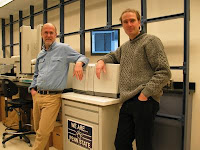
Scientists at Penn State are leaders of a team that is the first to report the genome-wide sequence of an extinct animal, according to Webb Miller, professor of biology and of computer science and engineering and one of the project's two leaders. The scientists sequenced the genome of the woolly mammoth, an extinct species of elephant that was adapted to living in the cold environment of the northern hemisphere. They sequenced four billion DNA bases using next-generation DNA-sequencing instruments and a novel approach that reads ancient DNA highly efficiently. 

"Previous studies on extinct organisms have generated only small amounts of data," said Stephan C. Schuster, Penn State professor of biochemistry and molecular biology and the project's other leader. 

"Our dataset is 100 times more extensive than any other published dataset for an extinct species, demonstrating that ancient DNA studies can be brought up to the same level as modern genome projects." Lab work at Penn State Stephan Schuster lab. Credit: Stephan Schuster lab, Penn State University.

The researchers suspect that the full woolly-mammoth genome is over four-billion DNA bases, which they believe is the size of the modern-day African elephant's genome. Although their dataset consists of more than four-billion DNA bases, only 3.3 billion of them — a little over the size of the human genome — currently can be assigned to the mammoth genome. Some of the remaining DNA bases may belong to the mammoth, but others could belong to other organisms, like bacteria and fungi, from the surrounding environment that had contaminated the sample. The team used a draft version of the African elephant's genome, which currently is being generated by scientists at the Broad Institute of MIT and Harvard, to distinguish those sequences that truly belong to the mammoth from possible contaminants. 

"Only after the genome of the African elephant has been completed will we be able to make a final assessment about how much of the full woolly-mammoth genome we have sequenced," said Miller. 

The team plans to finish sequencing the woolly mammoth's genome when the project receives additional funding.

Ball of mammoth hair.Ball of permafrost-preserved mammoth hair containing thick outer-coat and thin under-coat hairs. Credit: Stephan Schuster lab, Penn State University.

The team sequenced the mammoth's nuclear genome using DNA extracted from the hairs of a mammoth mummy that had been buried in the Siberian permafrost for 20,000 years and a second mammoth mummy that is at least 60,000-years-old. By using hair, the scientists avoided problems that have bedevilled the sequencing of ancient DNA from bones because DNA from bacteria and fungi, which always are associated with ancient DNA, can more easily be removed from hair than from bones. Another advantage of using hair is that less damage occurs to ancient DNA in hair because the hair shaft encases the remnant DNA like a biological plastic, thus protecting it from degradation and exposure to the elements. 

The researchers previously had sequenced the woolly mammoth's entire mitochondrial genome, which codes for only 13 of the mammoth's roughly 20,000 genes but is relatively easy to sequence because each of the mammoth's cells has many copies. In their most recent project, the team sequenced the mammoth's nuclear genome, which codes for all the genetic factors that are responsible for the appearance of an organism. 

The two methods combined have yielded information about the evolution of the three known elephant species: the modern-day African and Indian elephants and the woolly mammoth. The team found that woolly mammoths separated into two groups around two million years ago, and that these groups eventually became genetically distinct sub-populations. 

They also found that one of these sub-populations went extinct approximately 45,000 years ago, while another lived until after the last ice age, about 10,000 years ago. In addition, the team showed that woolly mammoths are more closely related to modern-day elephants than previously was believed. 

"Our data suggest that mammoths and modern-day elephants separated around six-million years ago, about the same time that humans and chimpanzees separated," said Miller. 

"However, unlike humans and chimpanzees, which relatively rapidly evolved into two distinct species, mammoths and elephants evolved at a more gradual pace," added Schuster, who believes that the data will help to shed light on the rate at which mammalian genomes, in general, can evolve. The team's new data also provide additional evidence that woolly mammoths had low genetic diversity. 

"We discovered that individual woolly mammoths were so genetically similar to one another that they may have been especially susceptible to being wiped out by a disease, by a change in the climate, or by humans," said Schuster.
Drawing of a woolly mammoth.

Members of the team previously ruled out humans as a cause of extinction for at least one of the Siberian sub-populations — the group appears to have gone extinct at least 45,000 years ago at a time when there were no humans living in Siberia. However, much debate still remains regarding the causes of extinction for the other group and for those populations that lived in other places, such as North America. Currently, the team is searching the mammoth's genome for clues about its extinction. 

"For example," said Miller, "most animal genomes contain integrated viral sequences and, though these are not directly associated with disease, evidence of multiple recent integration events could indicate a perturbation of virus-host interaction that might be responsible for disease. Alternatively, it might turn out that long generation times and limited out-breeding result in accumulation of deleterious genetic mutations. We are considering a number of possible causes of extinction." 

The new data are allowing the Penn State team to begin looking for genetic causes of some of the mammoth's unique characteristics, such as their adaptation to extremely cold environments. For instance, the team already has identified a number of cases in which all previously sequenced mammals, except mammoths, have the same protein segment. 

"One has to wonder whether a particular protein that has remained the same in animals for several billion years of combined evolution and then became different in mammoths could result in a mammoth-specific trait," said Miller. 

 Investigating the unique characteristics of woolly mammoths, and why they went extinct, are just some of the many tasks that the research team plans to pursue now that they have access to such a large quantity of sequence data. 

"This really is the first time that we have been able to study an extinct animal in the same detail as the ones living in our own time," said Schuster. 

Another significant aspect of the study is that it was completed by a small group of scientists at a relatively low cost and over a short period of time, whereas previous reports of modern mammalian genome sequences — including human sequences — have taken millions of dollars and several years of analysis by large groups of scientists to complete. 

Miller hopes that after he completes a few additional genome projects he can produce computer software that will enable others to perform low-cost mammalian genome analysis, and Schuster already is preparing to decode extinct genomes at an even faster pace. Schuster hopes that lessons learned from the mammoth genome about why some animals go extinct while others do not will be useful in protecting other species from extinction, such as the Tasmanian devil, whose survival is threatened by a deadly facial cancer. 

"In addition," added Schuster, "by deciphering this genome we could, in theory, generate data that one day may help other researchers to bring the woolly mammoth back to life by inserting the uniquely mammoth DNA sequences into the genome of the modern-day elephant. This would allow scientists to retrieve the genetic information that was believed to have been lost when the mammoth died out, as well as to bring back an extinct species that modern humans have missed meeting by only a few thousand years." 

About the project: In addition to being members of the faculty of Penn State's Eberly College of Science, Miller and Schuster are researchers associated with Penn State's Center for Comparative Genomics and Bioinformatics. The study also involved researchers from the Severtsov Institute of Ecology and Evolution and the Zoological Institute in Russia, the University of California, the Broad Institute, the Roche Diagnostics Corporation, and the Sperling Foundation in the United States. Penn State, Roche Applied Sciences, a private sponsor, the National Human Genome Research Institute, and the Pennsylvania Department of Health funded this research. More information about this project is on the Web at the Mammoth Genome Project

Reference: 
Sequencing the nuclear genome of the extinct woolly mammoth 
Webb Miller, Daniela I. Drautz, Aakrosh Ratan, Barbara Pusey, Ji Qi, Arthur M. Lesk, Lynn P. Tomsho, Michael D. Packard, Fangqing Zhao, Andrei Sher, Alexei Tikhonov, Brian Raney, Nick Patterson, Kerstin Lindblad-Toh, Eric S. Lander, James R. Knight, Gerard P. Irzyk, Karin M. Fredrikson, Timothy T. Harkins, Sharon Sheridan, Tom Pringle & Stephan C. Schuster 
Nature 456, 387-390, 20 November 2008, doi:10.1038/nature07446 
......... 

ZenMaster
For more on stem cells and cloning, go to CellNEWS 

Wednesday, 13 August 2008

Casting a Security Net to Catch Harmful Bacteria

White Blood Cell Uses DNA 'Catapult' to Fight Infection 
Wednesday, 13 August 2008 

Swiss and US scientists have made a breakthrough in understanding how a type of white blood cell called the eosinophil may help the body to fight bacterial infections in the digestive tract, according to research published online this week in Nature Medicine. Hans-Uwe Simon, from the University of Bern, Switzerland, Gerald J.Gleich, M.D., from the University of Utah School of Medicine, and their colleagues discovered that bacteria can activate eosinophils to release mitochondrial DNA in a catapult-like fashion to create a net that captures and kills bacteria. 

“This is a fascinating finding,” says Gleich, professor of dermatology and internal medicine at the University of Utah and a co-author of the study. 

“The DNA is released out of the cell in less than a second.” 

Eosinophils, which comprise only 1 to 3 percent of human white blood cells, are known to be useful in the body’s defence mechanisms against parasites. However, their exact role in the immune system is not clear. Unlike other white blood cells, which are distributed throughout the body, eosinophils are found only in selected areas, including the digestive tract. Mitochondria – often referred to as the power plants of the cell – are components within cells that are thought to descend from ancient bacteria. Although most cellular DNA is contained in the nucleus, mitochondria have their own DNA. Previous research has shown that eosinophils secrete toxic granule proteins during parasite infections and that these granule proteins kill bacteria. 

Simon, Gleich, and their colleagues found that when eosinophils are stimulated by infection, such as E. coli, they rapidly secrete mitochondrial DNA. This DNA binds to the granule proteins and forms a net that is able to trap and kill bacteria. The researchers also found higher levels of eosinophils were linked to improved survival and lower numbers of bacteria in the blood of mice with widespread bacterial infections. 

 The toxic proteins released by eosinophils are not always helpful to the body, however, and can damage nearby tissues. The inflammation in some types of asthma and Crohn’s disease, a chronic inflammatory disease of the bowel, is attributed to eosinophils. In fact, Simon and his team first found evidence of these DNA-protein traps in tissue taken from the digestive tracts of people with Crohn’s disease. 

Earlier studies suggested another type of white blood cell – the neutrophil – also expels DNA and granule proteins to kill bacteria. However, this DNA comes from the nucleus and its release causes the neutrophil to die. The eosinophil is able to survive after expelling its mitochondrial DNA. The researchers hope to learn more about how eosinophils expel mitochondrial DNA. They speculate that the explosive mechanism might rely on stored energy, similar to the way plants release pollen into the air. 

“We don’t know how eosinophils are capable of catapulting mitochondrial DNA so quickly,” says Gleich. 

 Future investigation may focus on how this energy is generated and how this new knowledge can be applied to the treatment of bacterial infections and inflammatory diseases related to eosinophils. 

Reference: Catapult-like release of mitochondrial DNA by eosinophils contributes to antibacterial defense 
Shida Yousefi, Jeffrey A Gold, Nicola Andina, James J Lee, Ann M Kelly, Evelyne Kozlowski, Inès Schmid, Alex Straumann, Janine Reichenbach, Gerald J Gleich & Hans-Uwe Simon 
Nature Medicine, 10 August 2008, doi:10.1038/nm.1855 
......... 

ZenMaster


For more on stem cells and cloning, go to CellNEWS 
at http://cellnews-blog.blogspot.com/

