
![]() |
Peter C.
Gray, Benjamin T. Spike and Geoffrey
M. Wahl. Credit:
Courtesy of the Salk Institute
for
Biological Studies.
|
Monday, 5 May 2014
Ability to Isolate and Grow Breast Tissue Stem Cells Could Speed Cancer Research
Posted by ZenMaster at Monday, May 05, 2014
Labels: breast, California, Cancer, fetal, mammary, mouse, research, stem cells 0 comments
Tuesday, 14 January 2014
Keeping Stem Cells Pluripotent
Posted by ZenMaster at Tuesday, January 14, 2014
Labels: California, Cancer, embryonic, FZD7, hESCs, human, pluripotent, research, stem cells, US, Wnt 0 comments
Thursday, 12 September 2013
Stem Cells are wired for Cooperation, Down to the DNA
Posted by ZenMaster at Thursday, September 12, 2013
Labels: Cancer, embryo, p53, research, stem cells, tumour suppressor 0 comments
Wednesday, 11 September 2013
Reprogramming in situ: Spanish Team is First to Produce Embryonic Stem Cells in Living Adult Organisms
![]() |
Pictured
are Manuel Serrano and Maria Abad
in his
laboratory at the CNIO. Credit: Spanish
National Cancer Research Center (CNIO).
|
Posted by ZenMaster at Wednesday, September 11, 2013
Labels: Cancer, embryonic, iPS, mouse, NANOG, pluripotent, self-renewal, stem cells, teratomas, totipotent 0 comments
Monday, 12 August 2013
Tumour Suppressor is needed for Stem Cells to Mature into Neurons
Posted by ZenMaster at Monday, August 12, 2013
Labels: Cancer, human, neuron, Sweden, tumour suppressor 0 comments
Tuesday, 25 June 2013
Enhancing RNA Interference
![]() |
Lipid nanoparticles (carrying
siRNA) are
shown as they are transported inside cells
using endocytic vesicles. Credit: Daria
Alakhova and Gaurav Sahay.
|
Posted by ZenMaster at Tuesday, June 25, 2013
Labels: Cancer, gene expression, Gene Therapy, microRNA, RNA, siRNA 0 comments
Friday, 23 March 2012
Embryonic Stem Cells Shift Metabolism in Cancer-like Way upon Implanting in Uterus
Switch may release fuel and materials for rapid growth and formation of layers that later become organs
Friday, 23 March 2012
![]() |
This is stem cell biologist Dr. Hannele
Ruohola-Baker of the University of Washington in Seattle. Credit: Univ. of Wash.. |
![]() |
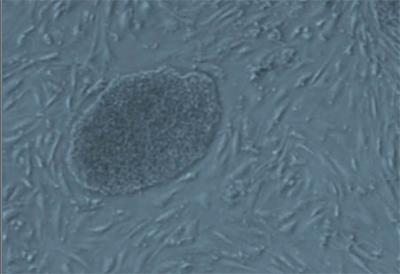
This is a microscopic image from the mouse
embryonic stem cell metabolism study in Seattle. Credit: Hannele Ruohola-Baker lab. |
Wenyu Zhou, Michael Choi, Daciana Margineantu, Lilyana Margaretha, Jennifer Hesson, Christopher Cavanaugh, C Anthony Blau, Marshall S Horwitz, David Hockenbery, Carol Ware and Hannele Ruohola-Baker
The EMBO Journal advance online publication 23 March 2012; doi:10.1038/emboj.2012.71
.........
For more on stem cells and cloning, go to CellNEWS at
http://cellnews-blog.blogspot.com/
Posted by ZenMaster at Friday, March 23, 2012
Labels: Cancer, embryo, embryonic, fetal, mouse, research, US 0 comments
Thursday, 5 May 2011
Normal Stem Cells Made to Look and Act Like Cancer Stem Cells
Thursday, 05 May 2011
Researchers at the University of North Carolina School of Medicine at Chapel Hill, after isolating normal stem cells that form the developing placenta, have given them the same properties of stem cells associated with an aggressive type of breast cancer.
![]() |
From left to right are study co-first authors Nicole Vincent Jordan and Amy N. Abell, Ph.D. Credit: Photo by Les Lang/UNC School of Medicine. |
The study will be published online Friday, May 6, by the journal Cell Stem Cell.
"We changed only one amino acid in normal tissue stem cells, trophoblast stem cells. While they maintained their self-renewal, these mutant stem cells had properties very similar to what people predict in cancer stem cells: they were highly mobile and highly invasive," said Gary Johnson, PhD, professor and chair of pharmacology at UNC and senior study author.
"No one has ever isolated a stem cell like that." Johnson is also a member of the UNC Lineberger Comprehensive Cancer Center.
In normal development, epithelial stem cells called trophoblasts are involved in the formation of placental tissue. To do so, they must undergo a conversion to tissue-like cells. These then travel to the site in the uterus where they revert to a non-invasive tissue cell.
"But the mutant trophoblast stem cells made in our lab, which would normally invade the uterus and then stop, just keep going," Johnson said.
The study led by the first authors, research assistant professor Amy N. Abell, PhD and graduate student Nicole Vincent Jordan, both working in Johnson's lab, showed that similar to triple-negative breast cancer stem cells, normal tissue stem cells also go through the same program of molecular changes during organ development called epithelial mesenchymal transition, or EMT. This suggests that breast cancer cells utilize this tissue stem cell molecular program for tumour metastasis, or cancer spread.
The discovery was made using a unique mouse model of tissue stem cell EMT developed in the Johnson laboratory. The study identified two proteins that regulate the expression of specific genes in tissue stem cells during organ development that control normal EMT. Inactivation of the proteins MAP3K4 and CBP in trophoblast stem cells causes them to become hyper invasive.
In collaboration with Aleix Prat, PhD and Charles Perou, PhD in the UNC Lineberger Comprehensive Cancer Center, the research team made another discovery: an overlap between the gene expression signature of the mutant tissue stem cells properties during EMT and the triple-negative human breast cancer gene signature that's predictive of invasiveness. The same genes were down regulated.
"This significant genetic intersection between tissue stem cells and TNBC has identified previously unrecognized genes that likely contribute to breast cancer metastasis," said Johnson.
"This newly identified gene signature is currently being investigated in different models of breast cancer with the goal of developing new therapeutic interventions for the treatment of TNBC."
Source: University of North Carolina School of Medicine
Contact: Les Lang
.........
ZenMaster
For more on stem cells and cloning, go to CellNEWS at
http://cellnews-blog.blogspot.com/
Posted by ZenMaster at Thursday, May 05, 2011
Labels: Cancer, research, self-renewal, stem cells 0 comments
Thursday, 10 March 2011
Reprogrammed Stem Cells Hit Genomic Roadblock
An international study shows that reprogramming cells leads to genomic aberrations
Thursday, 10 March 2011
It's a discordant note in the symphony of good news that usually accompanies stem cell research announcements. Stem cells hold enormous promise in regenerative medicine, thanks to their ability to regenerate diseased or damaged tissues. They have made it possible to markedly improve the effectiveness of many medical treatments – muscle regeneration in cases of dystrophy, skin grafts for treating burn victims, and the treatment of leukaemia via bone marrow transplants.
The problem is obtaining them. Those that are the true source of life, in the first days of embryonic development, are of course the most highly sought after; still undifferentiated, they are "pluripotent," meaning they can evolve into liver, muscle, eye – any kind of cell. But the issue of how to obtain them clearly raises insurmountable ethical questions.
"In this regard, the recent discovery of the "reprogramming" phenomenon, by which somatic cells can be induced to convert to a pluripotent state simply by forcing the expression of a few genes, opens a phenomenal number of possibilities in regenerative medicine," says Didier Trono, Dean of the EPFL School of Life Sciences.
"Imagine, for example, collecting a few cells from the hair follicle of a haemophiliac patient, reprogramming them to the pluripotency of their embryonic precursor, correcting the mutation responsible for the coagulation disorder that plagues the patient, and then re-administering them, genetically "cured," after having orchestrated a differentiation into fully functional progeny."
Increased risks for cancer?
But a study that has just been published in the journal Cell Death and Differentiation, to be followed by two articles in the journal Nature, is dampening those hopes. Conducted by the Department of Biochemistry at the University of Geneva and the European Institute of Oncology in Milan, with the participation of Trono's laboratory, it concludes that these reprogrammed cells exhibit a "genomic instability" that appears to be caused by the process used to return the cells to their embryonic state. Even more serious, the genetic mutations observed resemble mutations that are found in cancer cells. The scientists draw the conclusion that reprogrammed stem cells need to be extensively investigated before they can even be considered for use in regenerative medicine.
The experiments were done using mouse mammary and fibroblast cells. The researchers used three different processes for reprogramming the cells to a "stem," or embryonic, state. The first method was developed expressly for this study, and the others have already been well documented.
Yet all the processes led to the same, implacable conclusion: the genetic anomalies multiplied, in a manner that seems to indicate that they are inherent to the reprogramming process itself, which typically makes use of oncogenes.
"Interestingly, oncogenes have the potential to induce genomic instability," the authors explain.
These results underline the necessity of conducting further studies. First, to see if the genetic anomalies are serious enough to compromise the function and stability of cells regenerated using the reprogrammed cells; and second, to "refine the methods used for generating induced pluripotent cells, in order to avoid this problem. These results will thus motivate scientists to come up with a solution," concludes Trono.
Source: Ecole Polytechnique Fédérale de Lausanne
Contact: Emmanuel Barraud
.........
ZenMaster
For more on stem cells and cloning, go to CellNEWS at
http://cellnews-blog.blogspot.com/
Posted by ZenMaster at Thursday, March 10, 2011
Labels: Cancer, embryonic, epigenetic, iPS, research, stem cells 0 comments
Friday, 15 October 2010
Gene Identified that Prevents Stem Cells from Turning Cancerous
Friday, 15 October 2010
Stem cells, the prodigious precursors of all the tissues in our body, can make almost anything, given the right circumstances. Including, unfortunately, cancer. Now research from Rockefeller University shows that having too many stem cells, or stem cells that live for too long, can increase the odds of developing cancer. By identifying a mechanism that regulates programmed cell death in precursor cells for blood, or hematopoietic stem cells, the work is the first to connect the death of such cells to a later susceptibility to tumours in mice. It also provides evidence of the potentially carcinogenic downside to stem cell treatments, and suggests that nature has sought to balance stem cells' regenerative power against their potentially lethal potency.
Research associate Maria Garcia-Fernandez, Hermann Steller, head of the Strang Laboratory of Apoptosis and Cancer Biology, and their colleagues explored the activity of a gene called Sept4, which encodes a protein, ARTS, that increases programmed cell death, or apoptosis, by antagonizing other proteins that prevent cell death. ARTS was originally discovered by Sarit Larisch, a visiting professor at Rockefeller, and is found to be lacking in human leukaemia and other cancers, suggesting it suppresses tumours. To study the role of ARTS, the experimenters bred a line of mice genetically engineered to lack the Sept4 gene.
For several years, Garcia-Fernandez studied cells that lacked ARTS, looking for signs of trouble relating to cell death. In mature B and T cells, she could not find any, however, so she began to look at cells earlier and earlier in development, until finally she was comparing hematopoietic progenitor and stem cells. Here she found crucial differences, to be published Friday in Genes and Development.
Newborn ARTS-deprived mice had about twice as many hematopoietic stem cells as their normal, ARTS-endowed peers, and those stem cells were extraordinary in their ability to survive experimentally induced mutations.
"The increase in the number of hematopoietic progenitor and stem cells in Sept4-deficient mice brings with it the possibility of accelerating the accumulation of mutations in stem cells," says Garcia-Fernandez.
"They have more stem cells with enhanced resistance to apoptosis. In the end, that leads to more cells accumulating mutations that cannot be eliminated."
Indeed, the ARTS-deprived mice developed spontaneous tumours at about twice the rate of their controls.
"We make a connection between apoptosis, stem cells and cancer that has not been made in this way before: this pathway is critically important in stem cell death and in reducing tumour risk," Steller says.
"The work supports the idea that the stem cell is the seed of the tumour and that the transition from a normal stem cell to a cancer stem cell involves increased resistance to apoptosis."
ARTS interferes with molecules called inhibitor of apoptosis proteins (IAPs), which prevent cells from killing themselves. By inhibiting these inhibitors, under the right circumstances ARTS helps to take the brakes off the process of apoptosis, permitting the cell to die on schedule. Pharmaceutical companies are working to develop small molecule IAP antagonists, but this research is the first to show that inactivating a natural IAP antagonist actually causes tumours to grow, Steller says. It also suggests that the premature silencing of the Sept4/ARTS pathway at the stem cell level may herald cancer to come.
"This work not only defines the role of the ARTS gene in the underlying mechanism of mammalian tumour cell resistance to programmed cell death, but also links this gene to another hallmark of cancer, stem and progenitor cell proliferation," said Marion Zatz, who oversees cell death grants, including Steller's, at the NIH's National Institute of General Medical Sciences.
"The identification of the ARTS gene and its role in cancer cell death provides a potential target for new therapeutic approaches."
Source: Rockefeller University
Contact: Brett Norman
Reference:
Sept4/ARTS is required for stem cell apoptosis and tumor suppression
Maria Garcia-Fernandez, Holger Kissel, Samara Brown, Travis Gorenc, Andrew J. Schile, Shahin Rafii, Sarit Larisch, and Hermann Steller
Genes and Development, Oct 15, 2010; 24 (20)
.........
ZenMaster
For more on stem cells and cloning, go to CellNEWS at
http://cellnews-blog.blogspot.com/
Posted by ZenMaster at Friday, October 15, 2010
Labels: Cancer, mouse, research, stem cells, US 0 comments
Friday, 3 September 2010
Cancer-causing Gene Crucial in Stem Cell Development
Friday, 03 September 2010
Stem cells might be thought of as trunks in the tree of life. All multi-cellular organisms have them, and they can turn into a dazzling variety other cells — kidney, brain, heart or skin, for example. One class, pluripotent stem cells, has the capacity to turn into virtually any cell type in the body, making them a focal point in the development of cell therapies, the conquering of age-old diseases or even re-growing defective body parts.
Now, a research team at the University of Georgia has shown for the first time that a gene called Myc may be far more important in the development and persistence of stem cells than was known before. Myc is traditionally thought of as a cancer-causing gene, or oncogene, but recent studies from the UGA team have established critical roles for it in stem cell biology. The discovery has important implications for the basic understanding of developmental processes and how stem cells can be used for therapeutic purposes.
"This new research has uncovered a really unexpected role for Myc," said Stephen Dalton, GRA Eminent Scholar of Molecular Cell Biology and Georgia Cancer Coalition Distinguished Scientist at UGA.
"Our work here represents the first mechanistic characterization of how Myc controls the pluripotent stem cell state."
The research was published today in the journal Cell Stem Cell. Other authors of the paper include Keriayn Smith and Amar Singh of the Dalton lab at UGA. Smith left recently to begin a postdoc at the University of North Carolina. Dalton also is a member of the department of biochemistry and molecular biology in the Franklin College of Arts and Sciences and is affiliated with the UGA Cancer Center and the Biomedical and Health Sciences Institute.
In previous work, Dalton and his colleagues showed that Myc is critical for stem cell maintenance and that it affects widespread changes in gene expression. This latter function is crucial when stem cells differentiate into more specific cell types. In the new research, Dalton's team showed that Myc sustains the important pluripotency process by repressing a "master regulator" gene called GATA6.
"Pluripotency is the inherent property of a cell to create all cell types, from an embryo to an adult organism," said Dalton.
"It's an extremely important biological process, and knowing how it is controlled is crucial not only from a basic developmental perspective but also so that we can harness the potential of stem cells for the development of therapies, including those for diabetes, cardiovascular disease and a range of neurological disorders. Through a detailed understanding of early development, we hope to apply this information so that pluripotent stem cells can be differentiated into therapeutically useful cell types."
"These cells can then be used in a clinical setting to cure degenerative diseases and treat acute injury."
The finding that Myc inhibits GATA6 came as a big surprise to the Dalton team and points out that researchers have only seen the tip of the "molecular iceberg" in terms of what Myc does in stem cells. It now seems likely that understanding Myc's role in further detail will reshape current ideas about the basic biology of stem cells.
Dalton's new work addressed the uncertainty about how Myc maintains the pluripotency of stem cells by examining what happens when two forms of Myc — c-Myc and N-Myc — are inactivated in pluripotent stem cells. What he found was that either c- or N-Myc is sufficient to maintain pluripotency, but that the absence of both triggers the differentiation of pluripotent stem cells. Myc is therefore acting as a "brake" to restrain differentiation. When the "differentiation brake" is removed, cells lose their stem cell properties, and, potentially, they can become any one of over a hundred different cell types.
Pluripotent stem cells can now be made from skin fibroblasts and even from blood samples. (Fibroblasts are cells common in connective tissues of animals and play an important role in the healing of wounds, among many functions.) The conversion of mature fibroblast or blood cells back to pluripotent stem cells is called "reprogramming." Myc also has a critical role in this process. The ability to make stem cells from a patient's blood or skin is going to revolutionize medicine as it opens the way for patient-specific stem cells that would circumvent problems associated with immune rejection, said Dalton.
"During the reprogramming of cells, Myc represses genes associated with the differentiated state and primes them for the expression of stem cell genes," he said.
"We now speculate that during the early reprogramming stage, Myc serves to change the cell cycle so that stem cells can divide for long periods of time without aging. This is also what Myc does in cancer cells."
Dalton said that there is an intriguing relationship between normal stem cells and cancer cells. Since Myc is crucial for maintenance of stem cells and for the development of cancer, pluripotent stem cells represent a good model for tumour biologists. Cancer is thought to be initiated by rogue stem cells found in different tissues, further highlighting the link between stem cell biology, cancer and Myc.
"This is clearly going to be a major area of research for many years to come," Dalton said.
Source: University of Georgia
Contact: Stephen Dalton
Reference:
Myc Represses Primitive Endoderm Differentiation in Pluripotent Stem Cells
Keriayn N. Smith, Amar M. Singh, Stephen Dalton
Cell Stem Cell, Volume 7, Issue 3, 343-354, 3 September 2010, 10.1016/j.stem.2010.06.023
.........
ZenMaster
For more on stem cells and cloning, go to CellNEWS at
http://cellnews-blog.blogspot.com/
Posted by ZenMaster at Friday, September 03, 2010
Labels: c-Myc, Cancer, differentiation, research, stem cells, transcription factors 0 comments


